Reducing stairwell noise — how to go about it
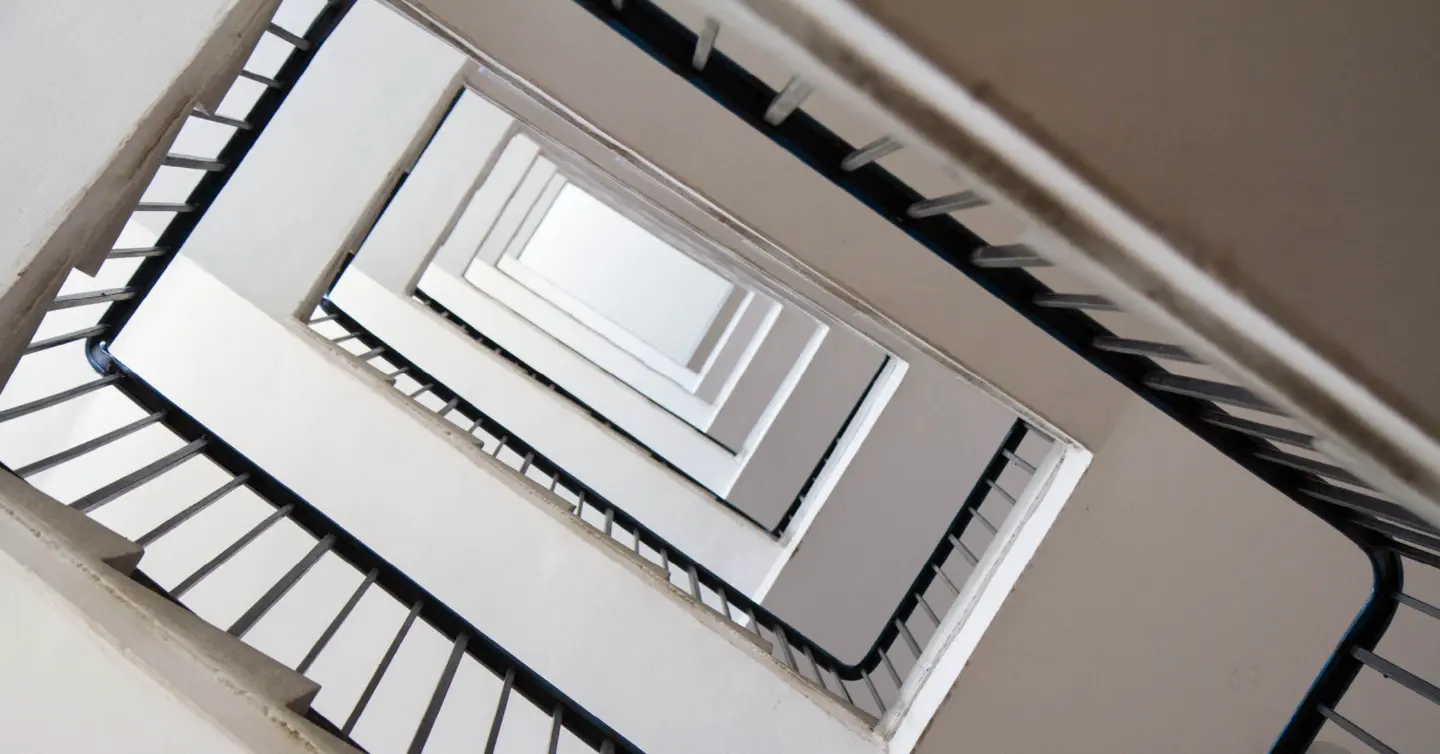
The Stairwell as an Acoustic Problem
A stairwell is typically a tall, hard, and poorly damped space. Sound reflects off walls, stair flights, landings, and ceilings, which can produce a long reverberation time. In practice, this means conversations, footsteps, and door slams are heard more intensely and cause greater disturbance.
Two phenomena must be distinguished, however:
Reverberation in the stairwell — repeated sound reflections within the shared space. This can be reduced by applying sound-absorbing materials to walls or ceilings.
Noise transmission into apartments — this depends primarily on the acoustic insulation of entrance doors, the walls separating the apartment from the stairwell, the tightness of connections, and any flanking paths such as service shafts, gaps, meter boxes, or ventilation openings.
For this reason, acoustic panels in the stairwell improve comfort in the shared space, but will not "quieten" an apartment if the weak link is the entrance door or air gaps.
Airborne Noise and Impact Noise
Airborne noise is sound that travels through the air: conversations, shouting, a barking dog, slamming doors, elevator announcements. For apartments, what matters most is the acoustic insulation of partitions — the ability of walls, doors, and floors to limit sound transmission.
Impact noise arises when mechanical energy is transferred directly into the building structure. Examples include footsteps on stairs, heel strikes, a dropped object, or vibrations from technical equipment. This type of noise can travel through stair flights, landings, walls, and floor slabs, and then be heard inside apartments as thuds or rumbling.
A "soft" wall material alone is not enough here. Solutions are needed that limit the transmission of vibrations into the structure — for example, resilient layers under stair finishes, appropriately selected underlays, perimeter isolation joints, and the avoidance of acoustic bridges.
Regulations and Acoustic Requirements
Requirements for noise protection in buildings derive from the Technical Conditions (Warunki Techniczne) and the referenced building acoustics standards. In practice, the main considerations are:
acoustic insulation of partitions against airborne sound,
insulation against impact sound,
permissible noise levels in protected rooms,
reverberation conditions in selected spaces,
the influence of technical installations, elevators, ventilation systems, and doors.
For apartment entrance doors opening onto a stairwell or general circulation corridor, a minimum acoustic insulation requirement of 37 dB applies. In practice, this means it is not enough to buy a door marketed as "quiet" or "solid." You need to check the declared acoustic parameters, the completeness of the sealing system, the threshold or drop-down seal strip, and the quality of installation.
The insulation measured in a laboratory and the insulation achieved after installation in a building are not always the same. A poorly sealed frame, missing threshold, gap under the door leaf, or installation openings can significantly worsen the result. Acoustics, like plumbing, does not forgive holes — only instead of water, it is silence that leaks out.
Materials and Solutions for Improving Stairwell Acoustics
Sound-Absorbing Wall and Ceiling Cladding
Acoustic panels, wood wool boards, perforated cladding with absorptive infill, or other materials with an appropriate sound absorption class can reduce reverberation in a stairwell. As a result, conversations, footsteps, and door slams become less intrusive, and the space sounds quieter and more "muffled."
These solutions improve room acoustics but do not increase the acoustic insulation of the wall between the stairwell and the apartment. This is an important distinction: absorptive material reduces sound reflections within a space, while acoustic insulation is improved through mass, airtightness, layer arrangement, and limiting flanking transmission.
In common areas of a building, fire resistance requirements, mechanical durability, resistance to soiling, and the cleanability of surfaces must also be taken into account.
Floor Coverings and Resilient Layers on Stairs
Acoustic mats under stair finishes can be an effective element in reducing impact noise, particularly when used under ceramic tiles, stone, wood, or PVC flooring. The key, however, is matching the material to the loads, usage pattern, and layer configuration. A mat that is poorly installed or pierced by rigid fasteners will not perform as its datasheet suggests. Systemic isolation of stair flights and landings from walls via vibration isolation is the most effective solution. However, in existing buildings, the available option is to renovate the finish layer and install a resilient underlay.
Apartment Entrance Doors
The apartment entrance door is one of the most important elements of protection against stairwell noise. It should have adequate acoustic insulation, full perimeter sealing, a correctly installed frame, and a solution to address the gap at the threshold — such as a fixed threshold or an automatic drop-down seal strip.
The most common mistakes include:
missing threshold seal,
poorly sealed joint between the door frame and the wall,
excessive gap under the door,
a letterbox slot or other openings in the door leaf,
installation with expanding foam without proper acoustic sealing,
selecting doors solely for their anti-burglary rating without checking acoustic parameters.
If stairwell noise is primarily audible in the hallway and rooms closest to the entrance, the first step should be an assessment of the door and its airtightness.
What Can an Individual Resident Do?
If the building manager has no plans to renovate the common areas, a resident can still improve acoustic comfort within their own apartment.
The most important measures are:
Sealing the entrance door — replacing seals, adjusting the door leaf, sealing the joint between the frame and the wall, and fitting a drop-down seal strip can produce a noticeable improvement, especially when the problem is gaps.
Replacing the door with a model of verified acoustic insulation — it is worth choosing doors with declared acoustic parameters and installing them as a complete system: door leaf, frame, threshold, seals, and properly filled installation gaps.
Eliminating air gaps — a peephole, letterbox slot, cable conduits, and installation gaps can all create paths for sound transmission. Even excellent doors lose their purpose if an acoustic "keyhole" is left right next to them.
Insulating the wall from inside the apartment — in more difficult cases, an independent acoustic stud wall can be built on the room side, with infill and facing boards of appropriate mass. Rigid connections to the existing wall must be avoided, however, as these can undermine the effectiveness of the solution.
Summary
Reducing stairwell noise requires identifying the source of the problem. If the main issue is reverberation and echo in the stairwell, sound-absorbing wall and ceiling cladding will be effective. If the problem is footsteps and thuds, the focus should be on impact noise and resilient layers under finishes. If noise is penetrating into the apartment, the key factors are the entrance door, the tightness of connections, wall insulation, and flanking sound transmission paths.
The best results come from combining measures on the shared-space side with measures on the apartment side. Well-designed sound-absorbing materials, properly selected mats under stair finishes, and doors with adequate acoustic insulation together form a system that genuinely improves residents' comfort.
También le puede interesar

Soundproofing Elevators and Elevator Shafts – Problems and Solutions
Soundproofing elevators and elevator shafts involves reducing the transmission of vibrations and noise generated by the elevator’s mechanical operation into the building structure. Vibration isolation solutions play a key role, including isolating the machine room and foundations, damping the guide rails, and using sound-absorbing materials inside the shaft. A comprehensive approach significantly improves acoustic comfort for users and protects the building from harmful vibrations.

How to reduce noise from upstairs neighbors?
Struggling with noise from upstairs neighbors? We offer effective solutions that improve acoustics and soundproofing, significantly enhancing your living comfort. Contact us at +48 517 650 923 and we will help you choose the best insulation tailored to your needs.

Anti-vibration mats for machines
Anti-vibration mats for machines are a professional solution that provides effective machine noise reduction and vibration damping in industrial halls. They help decrease noise at workstations, improve the room’s acoustics, and enhance employee comfort and safety. Using anti-vibration mats also ensures compliance with occupational health and safety regulations regarding noise and mechanical vibrations.