SBR vs EPDM - which gym rubber will work better for you?
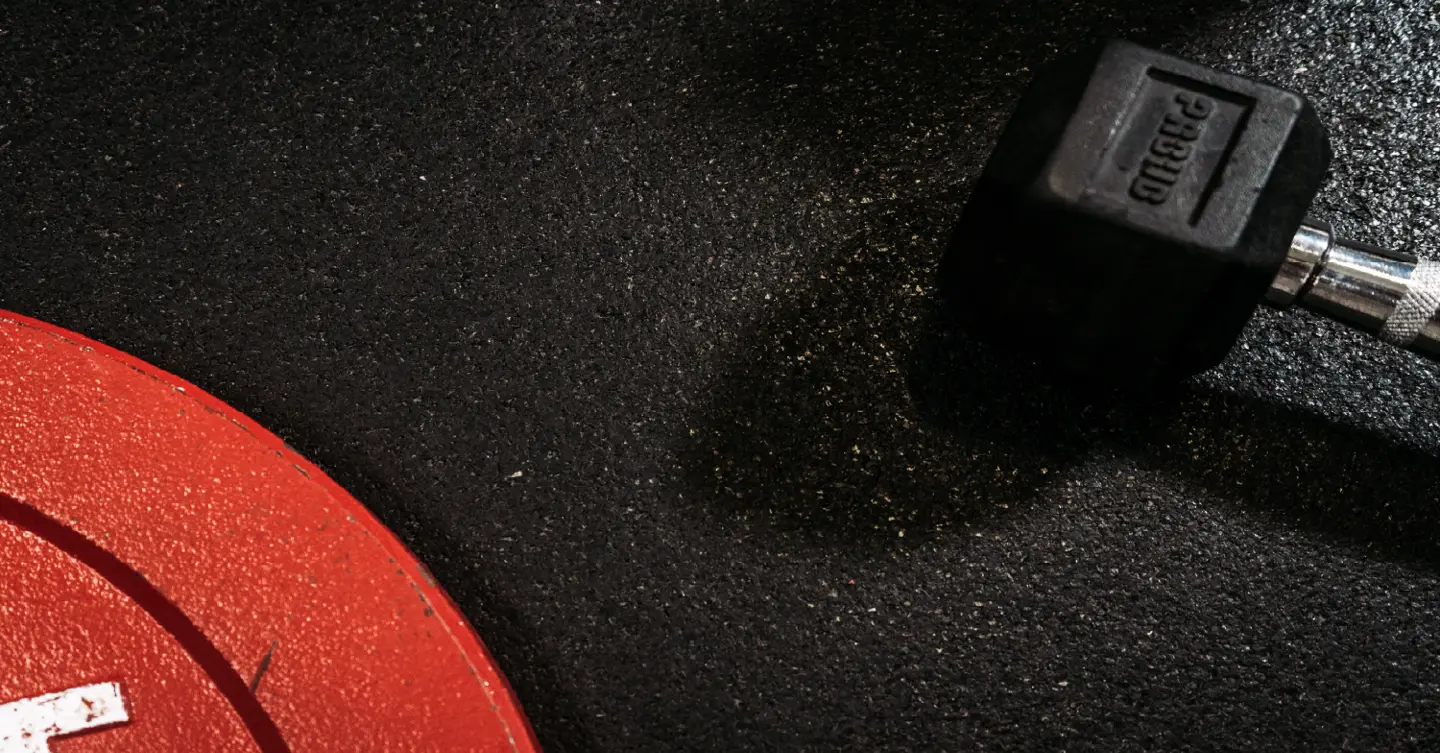
What Is SBR Granule?
SBR stands for styrene-butadiene rubber - a synthetic styrene-butadiene elastomer. In the context of sports and gym flooring, SBR refers to rubber granule produced from recycled car tyres. It is a dark, black or dark grey material that serves as the primary raw material for rubber mats, rubber slabs and rubber puzzle tiles in the economy and standard segments.
SBR granule is affordable because it comes from recycling - worn-out tyres that would otherwise end up in landfill are shredded and processed into a new product. It is an ecological and economical solution at the same time. Rubber mats made from SBR by epufloor have a characteristic dark colour - ranging from black to dark grey - which is the natural colour of tyre rubber.
The mechanical properties of SBR are excellent. The granule offers high resistance to compression, outstanding shock absorption, resistance to abrasion and a long service life. SBR rubber mats 20-40 mm thick used in gyms withstand decades of intensive use without any significant loss of properties.
What Is EPDM Granule?
EPDM stands for ethylene propylene diene monomer - an ethylene-propylene-diene elastomer. Unlike SBR, EPDM is a synthetic rubber produced from virgin raw materials rather than from recycled content. This results in a higher product price, but also in noticeably better visual and performance characteristics in certain applications.
The key advantage of EPDM is its availability in a wide range of colours. EPDM granule is produced in dozens of shades - from classic black through various greys, red, blue, green and yellow all the way to fluorescent colours. This opens up design possibilities that SBR simply cannot offer - coloured rubber puzzle tiles, patterned surfaces and clearly defined training zones marked out in colour.
EPDM also offers higher UV resistance - ultraviolet radiation does not cause coloured EPDM products to fade as quickly as dyed SBR products. This makes EPDM the preferred material for outdoor applications - playgrounds, sports terraces and outdoor fitness zones.
SBR vs EPDM - A Comparison of Key Properties
Mechanical strength is comparable between the two materials at the same thickness and product density. Both SBR and EPDM rubber mats absorb impacts excellently and are resistant to compression and abrasion. At identical technical specifications there is no clear winner here.
UV resistance is a clear advantage of EPDM. SBR products used outdoors can grey over time and lose elasticity under sunlight. EPDM products retain their colour and properties considerably longer - which is why playgrounds, outdoor sports surfaces and training terraces are built with EPDM rather than SBR.
Price is a clear advantage of SBR. Rubber mats, rubber puzzle tiles and rubber slabs made from SBR granule are typically 30-50% cheaper than equivalent EPDM products at identical thickness and density specifications. For large surface areas this difference is significant.
Aesthetics is an advantage of EPDM - the availability of colours means EPDM products are chosen wherever appearance matters: commercial fitness clubs, hotel gyms, playgrounds and office fitness zones.
Room acoustics - both materials have similar acoustic insulation and vibration damping properties. Acoustic mats made from rubber granule - whether SBR or EPDM - effectively reduce impact noise transmitted through the floor to neighbours below. Sound dampening in a gym is an important function of both materials.
Where Does SBR Perform Best?
SBR granule is the optimal choice for home and garage gyms and for all indoor applications where aesthetics are not the priority. Epufloor SBR rubber puzzle tiles are the most frequently chosen product for home gyms - thanks to their excellent price-to-quality ratio, ease of installation and long service life.
SBR is an ideal fit for the free weights zone, under an Olympic platform, in the cardio zone and anywhere else where cushioning and durability are paramount and floor colour is secondary. SBR rubber mats in roll form are the solution for large surfaces - training halls, commercial gyms and CrossFit boxes - where a uniform dark surface is both functional and economical.
Where Does EPDM Perform Best?
EPDM is the choice wherever appearance and resistance to outdoor conditions matter. Coloured EPDM rubber slabs are used in commercial fitness clubs where the visual identity of the space has marketing significance. Coloured EPDM rubber puzzle tiles delineate training zones - a different colour for the cardio zone, another for free weights, another for warm-up.
Outdoors, EPDM has no competition - children's certified playgrounds, sports terraces, outdoor running track surfaces and fitness zones at hotels and housing developments are all applications where UV resistance and colour durability are critical.
How to Choose Between SBR and EPDM - a Practical Cheat Sheet
If you are setting up a home or garage gym and your main priorities are functionality and cost - choose SBR. If you are fitting out a commercial fitness club where appearance matters to clients and you want a coloured floor - choose EPDM or a dual-layer product with an EPDM top surface. If you are planning an outdoor surface - choose EPDM for colour durability and UV resistance. If you have a limited budget and large areas to cover - SBR will be the more economical option.
Epufloor offers rubber mats, rubber puzzle tiles and rubber slabs in both SBR and EPDM variants - in a range of thicknesses and colours. The epufloor team will help you select the right product for your specific application and budget.
Summary
SBR and EPDM are two different materials with different strengths. SBR wins on price and performs excellently in indoor applications. EPDM wins on aesthetics and UV resistance, dominating in outdoor and commercial applications with visual requirements. Both materials offer outstanding shock absorption, durability and acoustic properties - which is why both have a permanent place in the epufloor product range.
Vous pourriez aussi aimer

Trends in Fitness Home Gyms – Minimalism and Functionality
Trends in home gyms in 2026 focus primarily on minimalism and functionality, which allow for creating simple, aesthetic, and well-organized training spaces. A key role is played by properly selected flooring—rubber mats, puzzle tiles, or EPDM—which ensures safety, comfort, and long-term durability. A modern home gym is a well-thought-out, multifunctional space tailored to the individual needs and lifestyle of the user.

Modern Gyms 2026 – What Materials Dominate Training Flooring?
Modern gyms in 2026 are increasingly based on three main types of flooring: rubber mats, rubber puzzle tiles, and EPDM surfaces, which differ in application and durability level. Key factors include durability, shock absorption, noise reduction, and the ability to adapt the system to the type of training and available space. Current trends clearly show a growing popularity of modular solutions and professional flooring systems that ensure user comfort and safety.

Home Gym Flooring – What to Choose: Rubber Mat, Puzzle Tiles or EPDM?
The flooring for a home gym should be selected according to the type of training, as it directly affects safety, comfort, and protection of the underlying surface. The most commonly chosen solutions are rubber mats, rubber tiles (puzzle mats), and EPDM surfaces, which differ in durability, installation method, and level of shock absorption. A well-informed choice allows you to create a functional and safe training space tailored to individual needs.